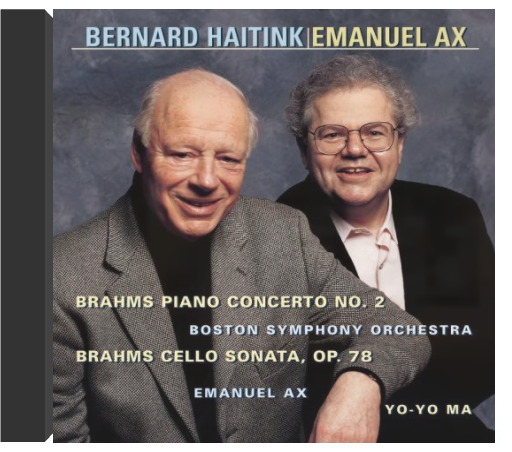
 Brahms: Piano Concerto No. 2; Cello Sonata, Op. 78Yo-Yo Ma Brahms: Piano Concerto No. 2; Cello Sonata, Op. 78Yo-Yo Ma  This is as fine a performance of the concerto as you are likely to hear. From the wistful opening horn solo to the sunny, cheerful finale, Ax and Haitink bring out its grandeur, power, and majesty, but also its tender, pensive lyricism and feathery playfulness. Every note is important; there is time to caress details and nuances without losing sweep and flow; rhythms are flexible, liberties poised, the orchestral sound is intense yet clear. The playing of the sonata, too, is all anyone could wish for, technically, musically, and expressively; but, among the transcriptions of Brahms's works—some of which he sanctioned or made himself—this arrangement of the First Violin Sonata for cello by an unknown hand is one of the more controversial and less felicitous. It entails a change of key, creating problems of range and texture; register changes break up melodic lines, and the soaring climaxes need the radiance of the violin tone. Ma's own transcription of Brahms's Third Violin Sonata, also recorded by him and Ax, is much better in every way. —Edith Eisler 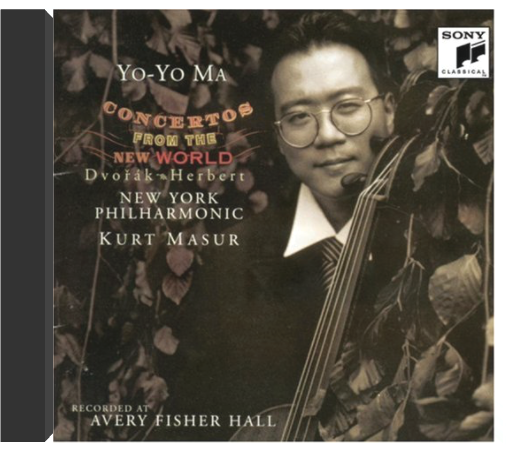 Concertos from the New WorldYo-Yo Ma Concertos from the New WorldYo-Yo Ma Dvorák's Cello Concerto is quite simply the finest piece ever composed for cello and orchestra. Yo-Yo Ma's first performance was hampered by a sluggish, boring accompaniment from Lorin Maazel and the Berlin Philharmonic. This live recording featuring the New York Philharmonic under Kurt Masur has all of the excitement lacking in that first version but plenty of poetry as well, amply evident in the both the songful slow movement and rapt final minutes of the finale. The coupling is uniquely apt: Herbert's is the very concerto that inspired Dvorák to compose his own. —David Hurwitz  Silk Road Journeys: When Strangers MeetYo-Yo Ma Silk Road Journeys: When Strangers MeetYo-Yo Ma This disc introduces Yo-Yo Ma's latest and most ambitious adventure, the Silk Road Project. It explores the cultures that flourished along the Silk Road, the ancient trade route that for centuries connected Europe and the East. Founded by Ma in 1998, the project aims to create connections, mutual trust, and cultural interchange between people from different parts of the world through their only shared language: music. 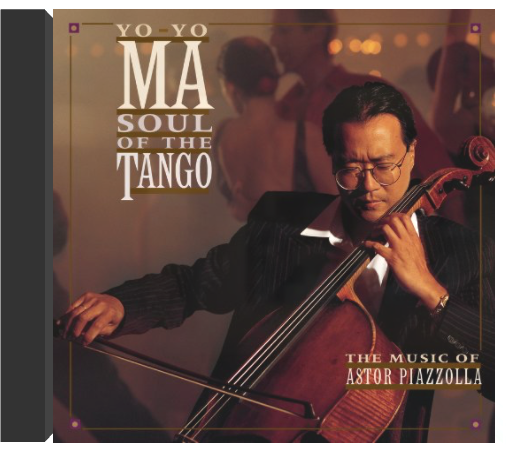 Soul of the Tango: The Music of Astor PiazzollaYo-Yo Ma Soul of the Tango: The Music of Astor PiazzollaYo-Yo Ma Yo-Yo Ma might seem like an unlikely protagonist for the tango, but this intrepid musical explorer has taken his task seriously, collaborating with experienced tango musicians. Ma even participates in a posthumous collaboration with one 1987 Piazzolla recording. Furthermore, while he's obviously the headliner here, he doesn't dominate the arrangements nearly as much as he does the billing and photography of the disc. While the result isn't your essential Piazzolla album (that would have to include more of the composer's own playing), it's an atmospheric and convincing collection, perhaps a good introduction for those who don't know the music. —Leslie Gerber 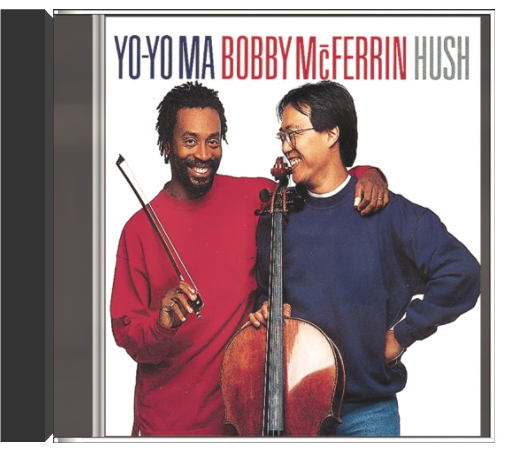 Yo-Yo Ma & Bobby McFerrin: HushYo-Yo Ma, Bobby McFerrin Yo-Yo Ma & Bobby McFerrin: HushYo-Yo Ma, Bobby McFerrin The idea here was to put two masters together—one classical cellist, one improvisational singer/sound-effects performer—and voilà! instant amazing, unique, hip—and, hopefully, hit—record. The intriguing setup was to see what would happen when each led the other through the unfamiliar territory of his own specialty. The success of this recording lies not so much in the music or even in the overall performances, but in the fascinating and fun opportunity to sit in on the musicians' good-natured, respectful give-and-take, to witness an uncommon form of artistic chemistry that allows each performer to expand his vision and even his technique. On one hand we get Bobby McFerrin's impressionistic, improvisatory jazz/pop; on the other we enjoy Yo-Yo Ma's highly refined, formalized musicianship. Originally planned as a disc for children, Hush goes far beyond its initial premise, with each of the 13 tracks demonstrating these musicians' unique gifts and showing that, whether it's Vivaldi or jazz, it's all music and it's all a lot of fun. —David Vernier 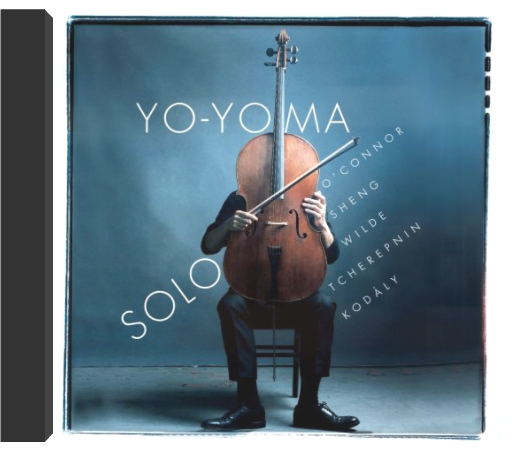 SoloYo-Yo Ma, Bright Sheng, David Wilde, Mark O'Connor SoloYo-Yo Ma, Bright Sheng, David Wilde, Mark O'Connor Born in Paris of Chinese parents, educated and anchored in America, performing on every continent, Yo-Yo Ma is a true citizen of the world by heritage, disposition, and choice. Dauntlessly adventurous, he has explored musical styles from baroque and classical to bluegrass, jazz, and electronic; now he has embarked on a study of the cultural traditions of the peoples along the historic Silk Road that brought Asia and Europe together. This disc is the first step on that journey of discovery; it is fascinating, and Ma is the perfect guide. Sheng's Seven Chinese Tunes are beautiful and each has its own character; the cello is tuned down for sonority. Wilde's lamentatious The Cellist of Sarajevo honors the cellist who played in that city's streets every day to commemorate the dead. Tcherepnin's rhapsodic Suite in three contrasting movements has a distinctly Chinese flavor. O'Connor's Appalachia Waltz was originally written for three instruments; with double stops and drones, it sounds perfectly self-sufficient. Indeed, Ma's playing throughout is stunning: it often seems impossible that one man and one instrument can create such a wealth of sounds. His tone is invariably pure and beautiful, sonorous as an organ on the low strings, radiant on top; he negotiates the most hair-raising pyrotechnics with apparent ease, his palette of colors is unlimited, and he is at home in every style and idiom. He even gives the fiendishly difficult Kodály sonata—with its incredible sound effects and fireworks—musical and emotional expression, making it sing, speak, shout, whisper, dance, and cry. —Edith Eisler 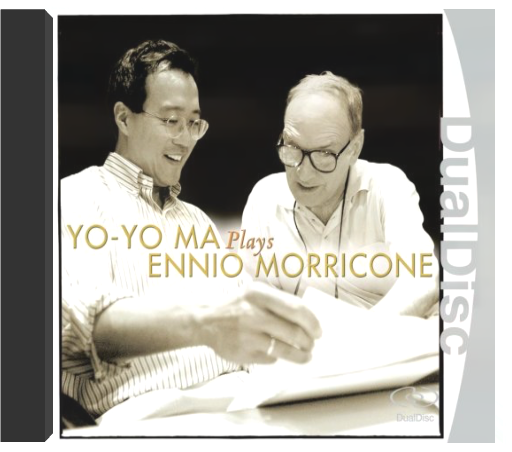 Yo-Yo Ma Plays Ennio MorriconeYo-Yo Ma, Morricone Yo-Yo Ma Plays Ennio MorriconeYo-Yo Ma, Morricone CD AUDIO SIDE: Entire Album 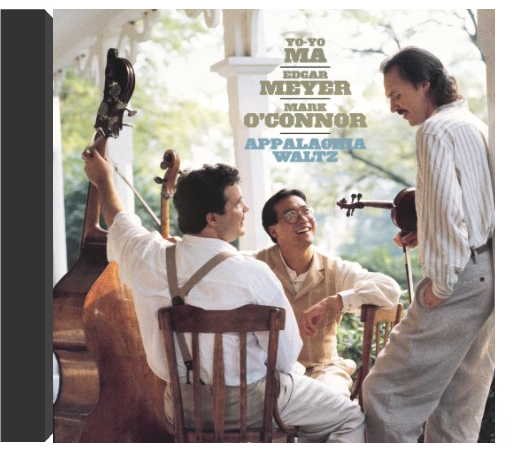 Appalachia Waltz / Ma, Meyer, O'ConnorYo-Yo Ma, Edgar Mayer and Mark O'Connor Appalachia Waltz / Ma, Meyer, O'ConnorYo-Yo Ma, Edgar Mayer and Mark O'Connor Track Listing. Track Title. 1 The Green Groves Of Erin - The Flowers Of Red Hill. 2 Appalachia Waltz. 3 Chief Sitting In The Rain. 4 Mama. 5 Butterfly's Day Out. 6 Druid Fluid. 7 First Impressions. 8 Etienne Et Petunia. 9 F.C.'s Jig. 10 College Hornpipe. 11 Pickles. 12 Old Country Fairytale. 13 Schizoozy. 14 Star Of The Country Down. 15 Speed The Plow Medley. 16 Fair Dancer Reel. Classical Data. Alt Title: O'Connor, Meyer, Meyer and others. Length: 69:31. Genre: Cross. Period: Contemporary. Featured: Mark O'Connor. Country: USA. Bio: Mark O'Connor is an astonishingly versatile American violinist and composer who has had exceptional success in country and bluegrass music, jazz, classical, and crossover projects. He began to win country fiddling competitions when he was a teenager and already intended to pursue a career in this music. He closely studied the playing of such popular violinists as the European jazz violinist Stephane Grappelli and the Texas fiddler Benny Thomasson. By the time he was 21, he had already played as a sideman with Grappelli, including a performance at Carnegie Hall. He moved to Nashville, Tennessee, in 1983, determined to make a living as a musician. But the fiddle, once the predominant instrumental sound of country music, had faded to a mainly supporting role to the plucked strings and drums of modern country. Although he did play mandolin, he took two years to be widely noticed. This came about because the Nitty Gritty Dirt Band engaged him to play on a single, "High Horse," that became a hit. O'Connor immediately became in demand as a session artist. During the rest of the decade he participated in over 450 albums, working with leading artists such as Emmylou Harris, Linda Ronstadt, Dolly Parton, Clint Black, Jimmy Buffett, and Randy Travis. He was a member of groups called Strength in Numbers, The Dixie Dregs, and The Dregs, and began to make his own albums. 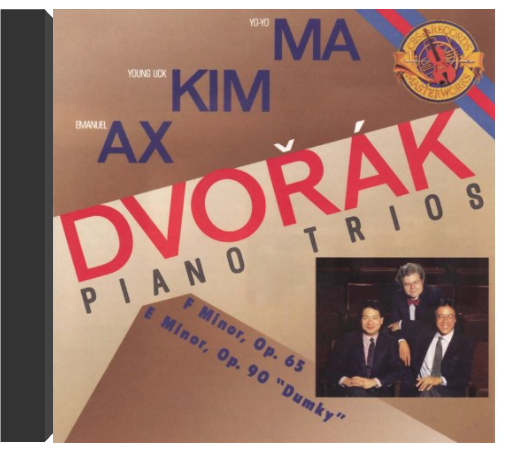 Dvorak: Piano TriosYo-Yo Ma, Emanuel Ax, Young Uck Kim Dvorak: Piano TriosYo-Yo Ma, Emanuel Ax, Young Uck Kim Dvorák's Trio in F minor, Op. 65, is quite simply the finest piano trio since Beethoven and a work you will fall in love with at first listen. It has been overshadowed by the later, more popular "Dumky" Trio, Op. 90, which is a pity because the earlier work is greater in every respect. Fortunately, you can make up your own mind with this excellent recording that presents Yo-Yo Ma in a chamber-music setting—one that suits him very well. His playing is both considered and considerate, and his burnished tone in the F-minor's slow movement is something to treasure. A wonderful disc. —David Hurwitz |
 Made with Delicious Library