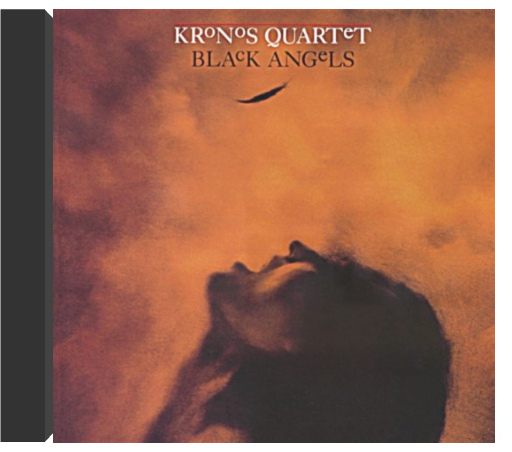
 Black AngelsKronos Quartet Black AngelsKronos Quartet  No Description Available. 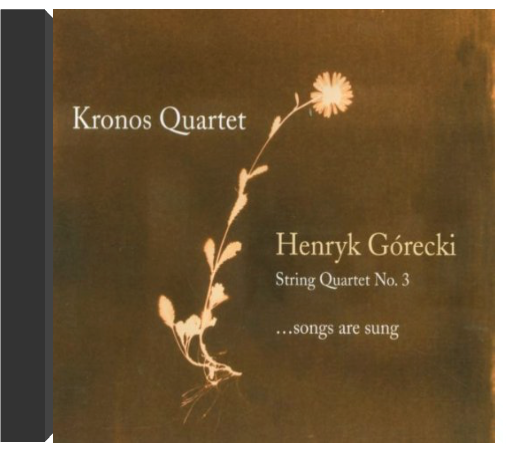 Henryk Gorecki: String Quartet No. 3...songs are sungKronos Quartet Henryk Gorecki: String Quartet No. 3...songs are sungKronos Quartet Henryk Mikolaj Górecki's String Quartet No. 3, Piesni Spiewaja ("...Songs Are Sung"), Op. 67—like its predecessors—was especially commissioned for and dedicated to the Kronos Quartet, whose impassioned, sympathetic performance burnishes it to a fare-thee-well. Approximately a decade of fits and starts separated the work's completion from its premiere, which finally took place in the composer's native Poland on October 15, 2005. Fans of his elegiac, incongruously popular Third Symphony likely somewhat startled by the spiky, dissonant virility that informs so much of Górecki's output. But the present piece would be an ideal follow-up for admirers of his more mystical, minimalist style. 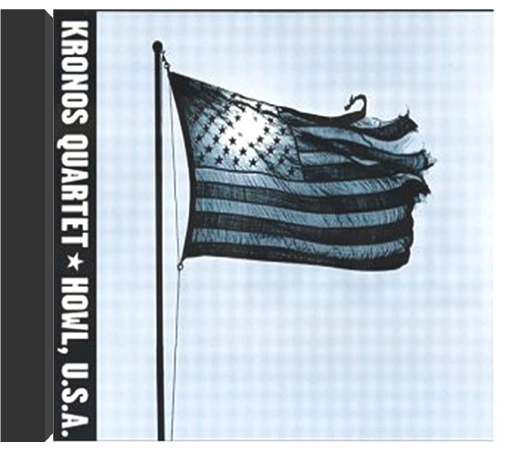 Howl U.S.A.Kronos Quartet Howl U.S.A.Kronos Quartet What can you say about the Kronos Quartet—the most celebrated maverick chamber ensemble in the overdressed world of classical music—as they take on a 25-minute musical accompaniment to Allen Ginsberg reading his poem "Howl"? First, they have all of Ginsberg's trappings down cold, from the dry wit and ironic commentary on 1950s U.S. culture, gay and straight, the post-Walt Whitman celebration of Ginsberg himself, and, alas, the sorrow at seeing the "best minds ... destroyed by madness." Kronos's music was written by Lee Hyla, and it walks, stomps, and canters as Ginsberg reads. The CD has three other spoken-word and music performances, all of them spectacular: Michael Daugherty's "Sing Sing: J. Edgar Hoover," replete with Hoover's tape-manipulated voice; Harry Partch's scintillating "Barstow," with a chorus of Ben Johnston's multiplied, dissonant voice; and Scott Johnson's "Cold War Suite," putting I.F. Stone's voice to the music. The music's complicated and jostling, rightly interrogating the narratives and invoking great chatter and clatter. —Andrew Bartlett 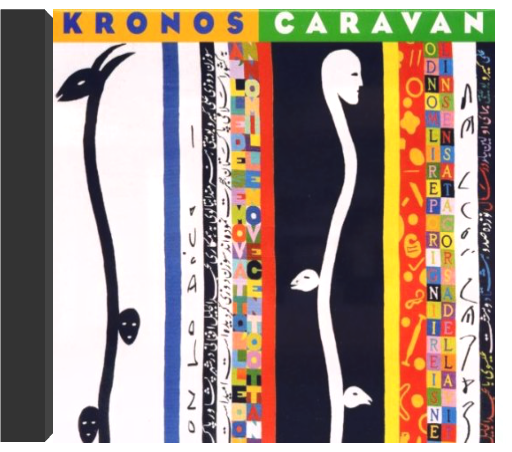 Kronos CaravanKronos Quartet Kronos CaravanKronos Quartet The Kronos Quartet—apparently tired of performing some of the most riveting Western classical works composed in the last century—decided to take a vacation with Caravan. Where did they go? As evidenced by this globetrotting disc, seemingly everywhere. Music from the Middle East, South America, India, Portugal, and California (to name just a few) find their way onto this genre-blurring disc, along with a few surprises. They do a dizzying take on Dick Dale's "Miserlou," which we learn was originally written by Nicholas Roubanis in the '30s; perform a tune from India's bustling "Bollywood" film music industry; and tackle Terry Riley's inventive "Corgeo Funebre en el Monte Diablo"—the second movement of his Requiem for Adam (written for the late son of Kronos leader David Harrington). These are disparate but enthralling works that run the gamut from frenetic to reflective. Even though Caravan sounds less cohesive than Kronos's other world music foray, Pieces of Africa, this is still an enthralling collection and a must for Kronos fans. —Jason Verlinde |
 Made with Delicious Library